You're currently on:

Lone Samaritan

DVD Release Date:
01 May 2010

Lone Samaritan

(Doc., 50 Min., DVD/MiniDV, color, 2009 - New Release)
  • Written by: Barak Heymann
  • Directed & Produced by: Barak Heymann
  • Language: Hebrew with English \ French Subtitles

Synopsis

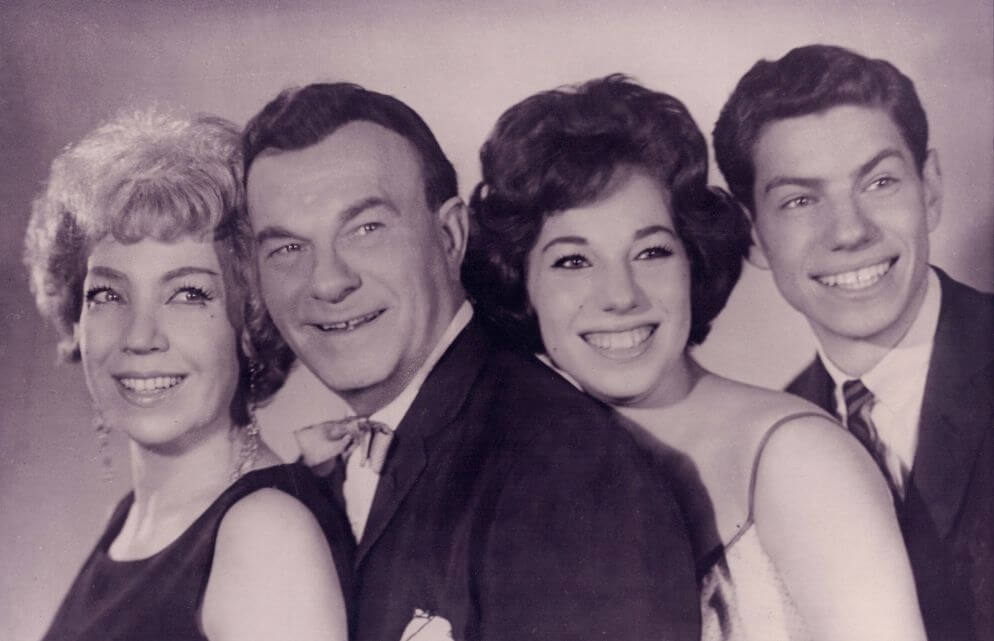
As a tiny sect constantly in danger of extinction, the Samaritans have very harsh rules about assimilation. After Sophie Tzdaka and her three sisters left the community, one after the other, the family became subject to terrible physical and mental harassment by sect members.

Director Barak Heymann ("Bridge over the Wadi", "Dancing Alfonso") follows Sophie, who is the youngest daughter as well as a TV personality, on a journey to her family's open wounds in an attempt to understand who the real victim of their shattered home was.

Lone Samaritan is a touching father-daughter journey, which raises universal issues of belonging, faith and identity, and forces its heroes to confront the difficult isolation of those who seek a personal path within a closed tribal world.

Images

Festivals

  • Jewish Motifs Film Festival, Warsaw, Poland, 2010
  • Toronto Jewish Film Festival, Canada, 2010
  • Official Competition - Fippa-Biarritz International Documentary Film Festival, France, 2010
  • Haifa Int'l Film Festival, Israel, October 2009

Educational

  • University of Pennsylvania

Press and Links


"I just viewed this unique and compelling film which premiered at the Haifa Film Festival during Succot. The film is about Sophie Tzedakah, an actress and TV personality, whose life is filled with contradictions. Sophie, born in 1975 to a Samaritan family living in Holon, has cut off her ties with the Samaritan community and become a Jewish Israeli." For the entire review by Amy Kronish, check: http://www.israelfilm.blogspot.com/


Let Sophie Go to Hell

The soap opera star Sophie Tzedaka has been living for years in a sort of Greek tragedy. Her older sister left their Samaritan clan years ago which resulted in the excommunication of their entire family. The head priest of the Samaritans declares: "let Sophie go to hell", while his son declares that if that was his sister, he would chop her head off just like a sheep.

It is around this emotional drama that Barak Heyman has created his impressive documentary The Lone Samaritan which tells this loaded story through the eyes of the father of the family, who loses his sight, his religious fervor, his extreme tribalism and his adherence to living in the past – all of this is well told by Barak Heyman in this film. 


http://www.nrg.co.il/online/47/ART1/950/754.html?hp=0&loc=132&tmp=8007

Meir Shnitzer, Maariv, October 7th, 2009


An Excellent Tragic Character

Sophie Tzedaka and her sisters left the Samaritan clan, an occurrence which caused her family to be excommunicated. The film portrays Tzedaka's father, this excellent tragic character, who insists on clinging to those who booted him out – and his daughter who is trying to get him to let go and to get angry.


The Samaritans excite the imagination. They are a minority, far from the public eye who conduct ancient rituals. But the film does not solve the mystery of Mount Gerizim. Director Barak Heyman does not concern himself with historical or theological questions…Heyman does not fight the Samaritans nor does he analyze them. Instead he creates a poetic etude on loneliness, family and emotional rifts. Rifts that are out of choice – and those rifts which are inevitable. This is not a film about the Samaritans, but about the inability to pull up roots. "You can take the individual out of the clan – but you cannot take the Samaritan out of the individual" says Sophie.


Maya Sella, City Mouse, October 11, 2009

http://www.mouse.co.il/CM.articles_item,1025,209,41004,.aspx


Samaritans Keep the Fire

In his film "The Lone Samaritan", Barak Heyman tells the story of Baruch Tzedaka, Sophie's father, whose life has become a nightmare since his daughters left the fold.  Heyman says: "the Samaritans are trying to keep the fire in ways that I found problematic".


Baruch Tzedaka was one of the most important and well known figures in the small Samaritan community in Israel. After each one of his four daughters left the sect, the other members of the community started to hassle him his life has become a nightmare. Barak Heymans's film "The Lone Samaritan", which was just screened at the Haifa International Film Festival, tells his story through the eyes of his daughter Sophie.


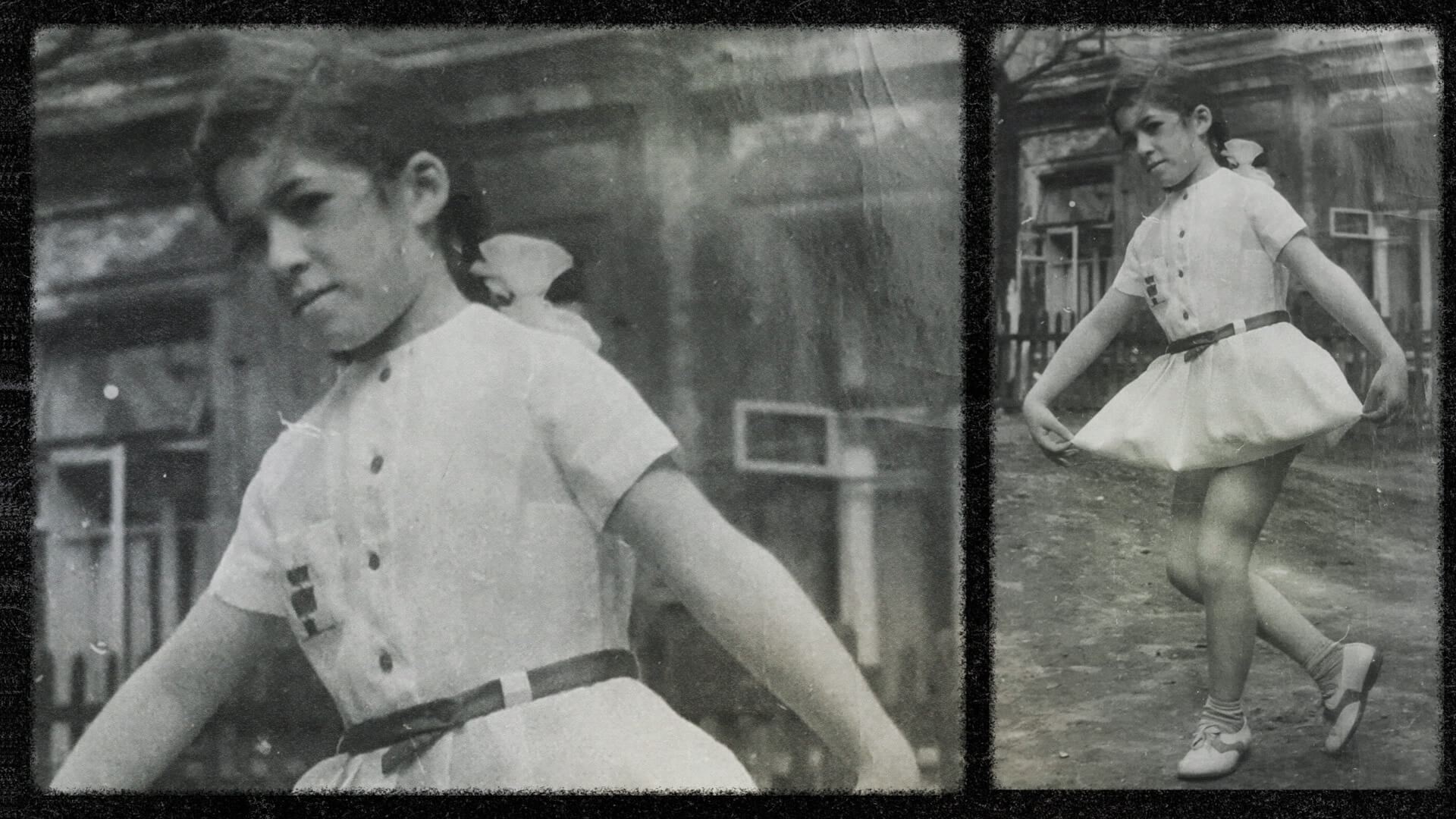
The film brings up painful childhood memories of a daughter of a torn family – a family that is deeply connected to a tight community and that knows how to punish as well. As told by that daughter, we get an emotional picture of the need to belong, the search for identity and the struggles of a community on the brink of extinction.

Heyman found this story coincidently. …"I knew that you would need to really get deeply involved with this, and I just wasn't emotionally available then" he says. He started to look for other directors, and met with many – some of whom were good and talented. But it just didn't work out. So one day he could no longer contain himself. Heyman grabbed a camera and went out filming. "I think something is going to come of this" he said to himself not knowing what he was getting into. "When I met Sophie's father, Baruch, I knew I would go for it. His story moved me, made me angry, and pulled me in. I knew that there was no reason to look elsewhere".


What was it that attracted you to this story?

Looking back I feel that this film is connected to my other films. Here too there is a painful struggle for freedom which takes its toll. Here too there are characters that are searching – and the searching is the main thing. I guess that I am attracted to stories of people whose life journey demands a lot – and it is a price they are willing to pay. Even if it means hurting those close to them.


Somebody has to pay the price


If you talk to him about his sources of inspiration, Heyman says that one of the works that most influenced him was Ari Folman's "The Stuff That Love is made of". His meeting with Folman came at a time when Heyman was still working as a journalist and was also working with his brother on their film series "Bridge over the Wadi".

"I had a lot of questions, doubts and moral issues about the realm of documentary. And we talked about that. Folman's film also dealt with personal happiness as opposed to choosing the betterment of those around you. It doesn't really matter what you do – someone is going to pay a heavy price. So in that sense, Sophie Tzedaka is a perfect hero-and her father, who pays the price of the choice his daughters made, is one of the most alternative people I know".


What do you mean?

There is no such thing as being a Samaritan outside of the Samaritan community. This is a stream of Judaism where religion and your communal affiliation go hand in hand. Unlike Judaism, Christianity or Islam, Samaritans must live only amongst themselves. They make a pilgrimage three times a year to Mount Gerizim. The Holiday of the Sacrifice is a must. This is a religious group that has never left the country. For 125 generations they have been here along with the other ancient peoples of the region. Although Baruch was excommunicated, he continues to observe religious rituals dutifully. The Samaritans are actually a stream within Judaism that continued to see Beit-El as a holy place. That’s why the Samaritans prefer to send their kids to mainstream secular schools. A saying such as “If I forget thee oh Jerusalem” which is taught in religious schools is confusing. Because for Samaritans Jerusalem is just like any other city in the country. It is not a city with any religious significance for them. And this makes for a fascinating conflict.


Up until the first Intifada the Samaritans lived harmoniously with their Palestinian neighbors in Nablus. After the Intifada broke out the Samaritans were brought up to Mount Gerizim for security reasons. But actually, even today the Samaritans can come and go freely in Nablus. “They are totally at home in Nablus” says Heyman “in some ways they are the only ones in this crazy country that can enjoy two worlds as a result of the tiny devout enclave they have created.”


To understand, but not to forgive


Heyman is critical of the way the Samaritan community treats the other, but at the same time he feels like he can understand them. “This is a community that is scared of its demise. Until just a few years ago there were only 600 people in the Samaritan community. The men were forced to bring women from the outside, which Samaritan women are not allowed to do. The fear of disappearing is a real one. They are really trying to hold onto the fire – but in problematic ways. But the principal behind their actions is totally understandable and even the Tzedaka family understands this”.


The grand priest and his son speak about betrayal in very extreme terms. A Samaritan woman who marries out is considered dead.

They are scared. I can understand that, but it is hard to accept. I was pretty taken aback by the young people I interviewed in the synagogue. They are around my age and we listen to the same music, surf the internet, work in Tel Aviv. I expected them to be more open, but what I discovered is that they are not less extreme than the grand priest. As far as they are concerned Baruch Tzedaka gave his daughters too much freedom and for this he has to pay.


During the filming many things happened for the first time right in front of the camera. For example, Sophie meets her older sister who was the first to leave the fold to marry a Jew. The price for her defection was something the entire family had to pay for. “The two older girls left the community and the two younger daughters were then marked and basically became second class citizens” says Heyman. “Sophie was not willing to live like this. With all of her love for the religion, living as a marked person broke her. That and the fact that people within the community tried to blame her father for the theft of torah scrolls. That she found unforgivable and decided to leave for good”.

They basically pushed her out.

Yeah, and that is kind of the subliminal message for the Samaritans who were not wise enough to embrace the family after the two older girls left. And in so doing they gave up on 15 members of the clan. When you are talking about a community of 750 that is a dramatic number. I feel that they did not handle this conflict correctly.

How did the story with the theft end?

Two of the torah scrolls taken from the Samaritans in Nablus were eventually found in the possession of the Hamas. This was a terrible revenge. A really ugly libel. Baruch is one of the most religious people I know. He knows the five books of Moses by heart and cleaves to his religion. He is like Noah or Job with all of the bad that has beset him. His religious belief has remained strong – but his faith in the other members of the clan has eroded. This story of the theft involved two days in prison and brought on his illness. This all happened 15 years ago and he still has not shaken the insult – not to mention his blindness and diabetes.


A certificate of misery


This film means to open up wounds. On the one hand it presents a father who refused to abandon his daughters. On the other hand he clings to his religion which demands that he abandon them. The film shows a family that is trapped between the two worlds in which they were condemned to live. “This is a tremendous tragedy and that is why it took me three years to make the film” Heyman says. “I don’t think you can reach emotional depths any other way. This is a significant psychological experience which requires time. Because in life, unlike in movies, dramatic events happen slowly”.


Even though he has a nice documentary resume, Heyman admits that he still feels that he is at the start of his career. “I feel like I still have a ways to go”….on this film I was the executive producer, the post-production crew and the messenger. You work on a film for three years and it becomes your life. And even in 20 years I will have to feel good about it, so I might as well make the best film I can. It is hard in Israel; the budgets are low and the competition is high. But I am not willing to give up on the joy of creativity. You cannot make art with bad energy. Maybe that’s innocent, but I hope to never loose that feeling”.

Meirav Yudilevitz, YNet, October 8th, 2009

http://www.ynet.co.il/articles/0,7340,L-3787107,00.html


“A moving work, an impressive documentary”

Meir Shnizer, Maariv


“A poetic study of loneliness, family and rifts”

Maya Sela, Ha’aretz


“A touching portrait that addresses the need to belong, the search for identity and the way a small community in danger of extinction copes.”

Meirav Yudelevitz, Ynet


“A praiseworthy original work”

Tigal Nasee, City Mouse


“ Heyman’s loaded work succeeds in being effective without falling into clichés and sentimentality”

Alon Hadar, Maariv


“A human story from which we can learn a lot”

Anat Dolev, Reshet Bet Radio


“A strong film”

Avri Gilad, Galai Tzahal


“A good and interesting film”

Tomer Persico, notes online


“I give it a 9”

Nir Kipnis, Globes


“the film provides an interesting peek into an almost unknown world”

Uri Klein, Ha’aretz

 
Search Site