You're currently on:

Sayed Kashua- Forever Scared

DVD Release Date:
01 May 2010

Sayed Kashua- Forever Scared

(Doc., 52 Min., DVD/MiniDV, color, 2009 - New Release)
  • Written and Directed by: Dorit Zimbalist
  • Produced by: Barak Heymann & Dorit Zimbalist
  • Language: Hebrew & Arabic with English subtitles

Synopsis

"I'm scared of cars, of dogs, of snakes; I'm scared of airplanes, helicopters, tanks and soldiers. I'm scared of terrorist attacks. I'm scared of Jews, I'm scared of Arabs, I'm scared that some day, they'll put us in refugee camps" (Sayed Kashua, Haaretz, 2002).

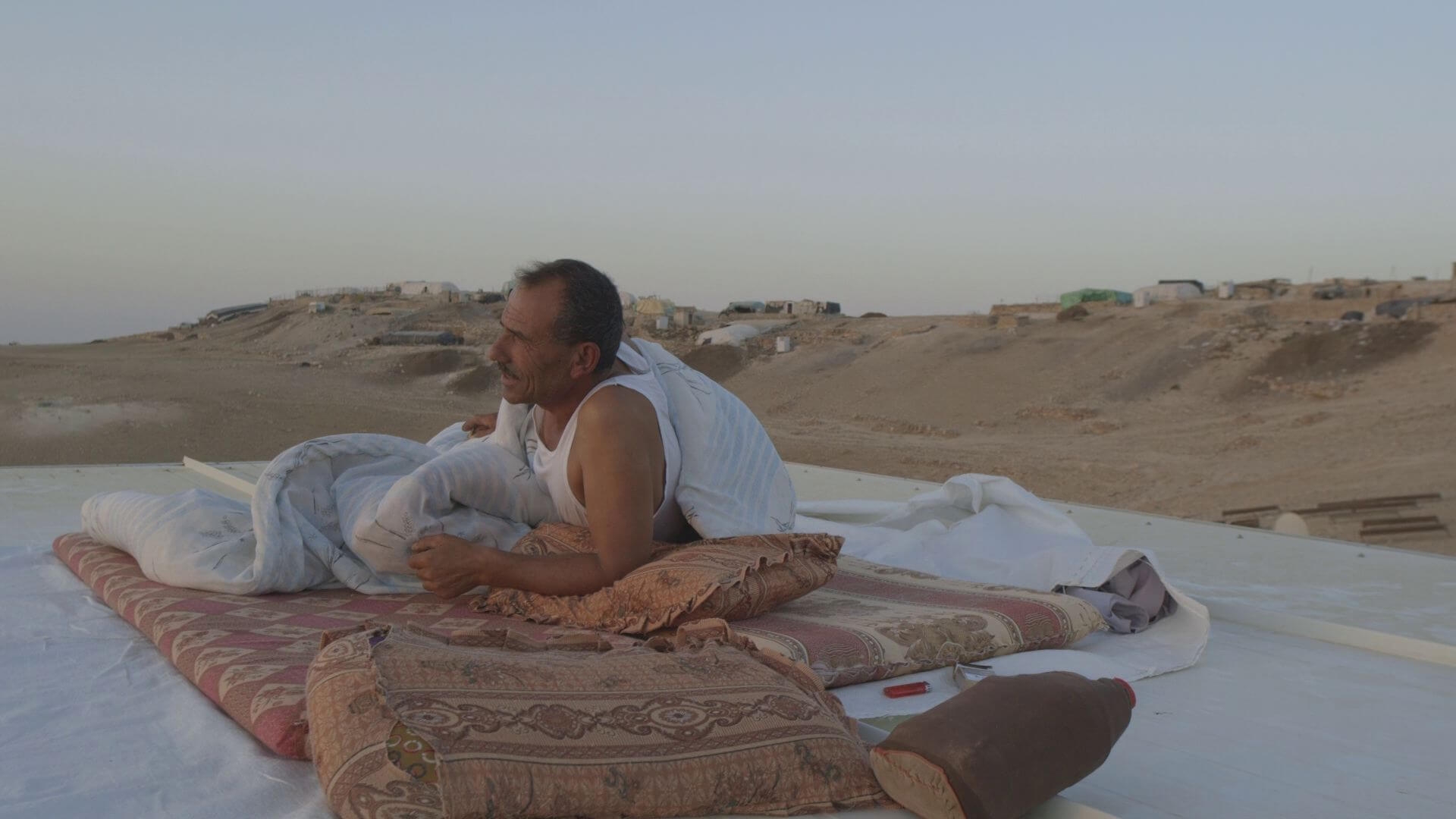
Sayed Kashua always feels he doesn't belong. The Jews don't like him because he's an Arab. The Arabs don't like him because he's successful. The Arabs think he's a collaborator. The Jews think he's a drunk. He's always viewed as an Other- and he's always scared. Sayed Kashua – Forever Scared accompanies Kashua, an Israeli-Arab author and scriptwriter, for seven years through the upheavals and events that change his life. This is an intimate yet political portrait of a writer who is also a loving husband and father of two. His family pays a heavy price for the choices he makes and the perpetual wandering from place to place, from nation to nation, belonging neither here nor there.

Images

Festivals

  • Jewish Motifs Film Festival, Warsaw, Poland, 2010
  • Toronto Jewish Film Festival, Canada, 2010
  • International Film Festival of Uruguay, 2010
  • Berlin Jewish Film Festival, Germany, 2010
  • Film IsReal, Amsterdam, 2010
  • The REEL ISRAEL Films & Conversation, Cleveland, USA, 2010
  • The Other Israel Film Festival, NY, 2009
  • San Francisco Jewish Film Festival, USA, 2010
  • IDFA Int'l Doc Film Festival, The Netherlands - Official Competition, 2009
  • Jerusalem Film Festival, Israel, July 2009

Educational

  • University of Pennsylvania

Press and Links

TWO COWARDS

Yael Shuv/ TimeOut Nov 26th, 2009

Over the past few Saturdays, Dorit Zimbalist's fascinating documentary SAYED KASHUA: FOREVER SCARED has been showing at the Tel Aviv Cinematheque. The film offers an honest and provocative portrait of the author, the screenwriter and the columnist Sayed Kashua who is apparently scared of everything; dogs, planes, Jews, Arabs and especially death.

Sijfra Herzberg / Vrij Nederland, 21 November 2009


Director Dorit Zimbalist's film "Sayed Kashua Forever Scared" is now showing at IDFA.

"It was not easy making this film. Sayed has become a good friend, but he is not always easy to communicate with. Psychologically it was also difficult. It was hard for me to see through his eyes the society of which I am a part. During the first year of filming there were frequent terror attacks and he was just as scared as I was. I guess it is obvious if you stop and think about it. His life will always be harder than mine. Language is his tool – and yet he belongs to nowhere. He does not want his daughter to grow up with the values and the limits of the village where he grew up. But as soon as he tried to register her for a Jewish kindergarten, suddenly there was no longer any room.

Many Arabs see him as a collaborator and he has no where to run to. As someone who makes a living from writing, he has nowhere to hide from language. But how long can you serve as a fig leaf? To your bosses who are Jews –liberal Jews, but they are still Jews".

Kashua struggles with his public image. He would prefer to write quietly, but he knows that he has to make public appearances. He has to travel and be interviewed because this is who he has become. And this is well illustrated in the film. When his television series is presented at the London Jewish Film Festival, he gets up and says –as a double entendre- "thanks to the Jews".

http://www.vn.nl/Wad-mediabank-pagina/Omdat-ik-uniek-ben-IDFA.htm


Israeli filmmaker Dorit Zimbalist's SAYED KAHSUA - FOREVER SCARED follows the  writer over   a seven-year period, in the process examining the situation of Israel's one million Arab citizens - descendents of Palestinians who remained living in their towns and villages within Israel's borders after 1948." for the entire review please check: :

http://www.idfa.nl/industry/Festival/news/films-of-the-day/inside-story.aspx


Not Your Arab Boy-Toy

Globes, December 17th, 2009

On Saturday night the documentary film SAYED KASHUA: FOREVER SCARED will be broadcast on Channel 2. This is a film that follows the last seven years in the complex life of the Arab-Israeli author, playwright and columnist.

The film portrays in depth the complex soul of the sensitive Arab-Israeli author who insists on living his life as both and Arab and an Israeli, as an equal among equals who is completely aware of the challenges.

Zimbalist's camera followed Kashua for the last seven years even before he became a well known figure. She identified him as a unique voice in the Israeli landscape; a young opinionated and witty Arab. He writes Hebrew on a high level that would make many Israelis blush. He is intelligent and intellectual, willing and able to influence.

He is a young man torn between two identities, searching for calm and belonging –but cannot find them. …after sifting through 100 hours of footage and editing it down, Kashua comes across just as he is; overwhelmed by fears, worried and cowardly but his fears stem primarily from a heightened awareness and the price which he pays for his chosen path-a path that he feels he had to take

Really the last thing you could say about Kashua is that he is a coward. Kashua writes about his life and he writes about it bravely…

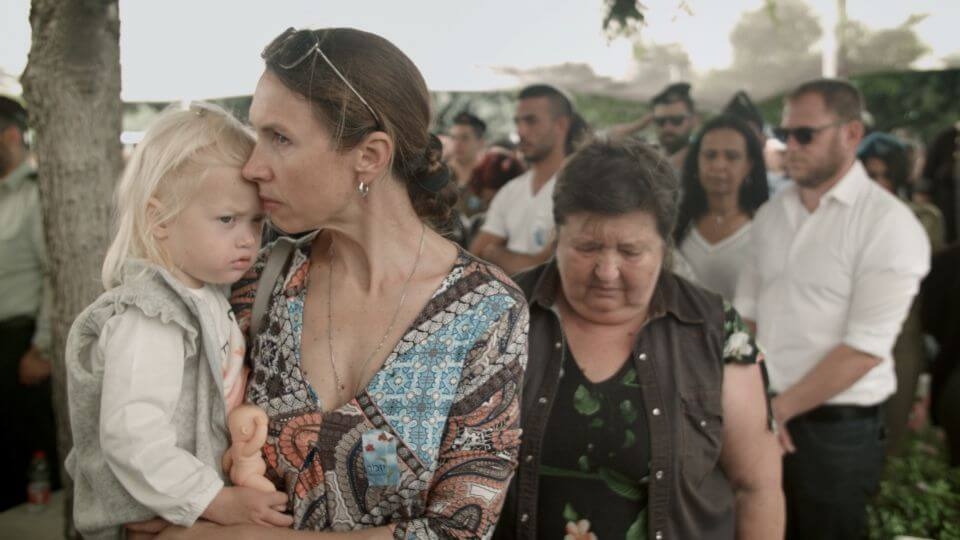
One of the most powerful scenes in the movie is where Zimbalist documents Kashua's daughter on Israeli Memorial Day at the mixed Arab-Jewish kindergarten which she attends. During the siren, his 4 year old daughter finds it hard to stand up for a moment of silence. Even though she chose to go to her school that morning with her Jewish and Arab friends, she finds it difficult to "take a stand". She gets up and sits down. Then she runs out and finds her father who is sitting outside smoking a cigarette. A great snapshot.

http://www.globes.co.il/news/article.aspx?did=1000521405&fid=3317


City Mouse

Tigal Nasee

Director Dorit Zimbalist followed Sayed Kashua for seven years, during which he continued to express himself where ever possible. During this period he went to numerous schools where he tried to explain to angry Jewish kids why he still believes that there is discrimination. He also worked on the TV show "Arab Labor" which is based on his life – and above all, he continued, despite it all, to write honestly and frankly. At the center of his writing is his attempt to present the Arab-Israeli identity crisis and their status as class B citizens. And Zimbalist's film is successful at capturing both of these issues.


Sayed's Fears / Michal Hoenig, Ma'ariv Online, 10/12/2009

http://www.nrg.co.il/online/47/ART1/977/175.html


The trauma of the October 2000 riots lead director Dorit Zimbalist promptly to Israeli-Arab writer Sayed Kashua. The result is the documentary "Sayed Kashua-Forever Scared" which portrays a man torn between two worlds. "He is not a coward" explains the director in an interview, "it is just the scary reality in which he lives".


"I am scared of cars, dogs, snakes; I am scared of airplanes, helicopters, soldiers and tanks. I am scared of terrorist attacks. I am scared of Jews. I am scared of Arabs. I am scared that we will be transferred to refugee camps".


After 11 years abroad in Holland, Dorit Zimbalist returned to Israel straight into the riots of 2000. "My landing left me feeling trauma and I went looking for a way to meet Israeli Arabs. That's how I ended up finding Sayed Kashua's columns in the newspaper and his book "Dancing Arabs". His originality and honesty really stuck out and so I decided to contact him".

"We met and I told him that I had a small camera, no money and that I wanted to make a film about him. He agreed right away. We could tell right away that we thought alike. But neither of us thought it would take seven years to make this film. Sayed actually believed that it would take a couple of months and it might help sell some copies of his book. As it is, the film will probably help promote his third book which he is working on now".


During the filming, did you feel like he identified more with the Palestinian or the Israeli side?


I can testify that at first I felt kind of uncomfortable because of the whole situation of the Arab-Israelis. He is an artist and a complex human being and it was important for me not to judge him. This is where the problem of having a Jewish woman make a film about an Arab writer comes into play. But I tried to do everything totally on the up-and-up. I tried to bring up all aspects and sides of the story for the viewer without putting anyone on trial. I did not try to analyze it all.


Why did you give the film the title you did?


I personally feel like Sayed is an incredibly brave person and that's why the film is called "Forever scared" and not "born scared". You have to be accurate here; it is ironic as Sayed himself writes. The issue of his fears really came up in the editing stage in the editing room where our editor Bat Sheva Yanko did amazing work.


It is not that he is a coward, but it is the reality in which he lives that is scary. His biggest fear is the fate of the Arab-Israeli community, the possibility of transfer. All of this bothers him because of his heightened awareness. I think that this also makes him a great writer. Additionally the issue of fear is also brought up by his father in the film as well".


How did he feel being followed around by a camera all the time?


He was not comfortable with the exposure. He trusted me and did it with all his heart. When someone else all of a sudden is in your space it is not easy.


Zimbalist explains that she chose Kashua as a sort of mirror to Israeli society as it opposed to Arab society – while also trying to tell the story of an individual and not to bring in academics and politicians to comment on the issues.

"Sayed is a man of 34. When we started filming he was still in his 20's. This isn't a film about the end of someone's life, he is just starting out. It just kind of happened against his will that he is some sort of representative".

But during the film he does comment on explosive issues such as the Holocaust, Palestinians, and Arabs. Were there things you had to censor?

There was no discussion of censor. I was not looking for cheap headlines. Things are not black or white. He is very clear with his positions and I actually agree with them. Every viewer can take it to where they want. Sayed does write about the Holocaust and other explosive topics. But just as he is cautious, I too tried to carry along that same path.

The film is about an Arab family, but ironically, there is very little Arab language dialogue. Didn't you feel like this hurt the integrity of the film?

When I was not there they did speak Arabic. But they are all fluent in Hebrew so they did that for my benefit. But when his grandmother speaks, for example, we had to put on subtitles.

How was the film received at IDFA?

The theaters were filled each time and some interesting questions were asked from the audience. The film deals with complex issues that are hard to translate outside of Israel. Many people do not know that 20% of the population here is made up of Arabs. So it opened up a something new for them about Israeli society. The audience there could not understand on the level that an Israeli audience can.

Do you stay in touch?

Yes. We stay in touch. We became friends. I am planning that in the future my son will make a film about his daughter.

 
Search Site