March 2024
Attending Thessaloniki Agora Doc Market 2024
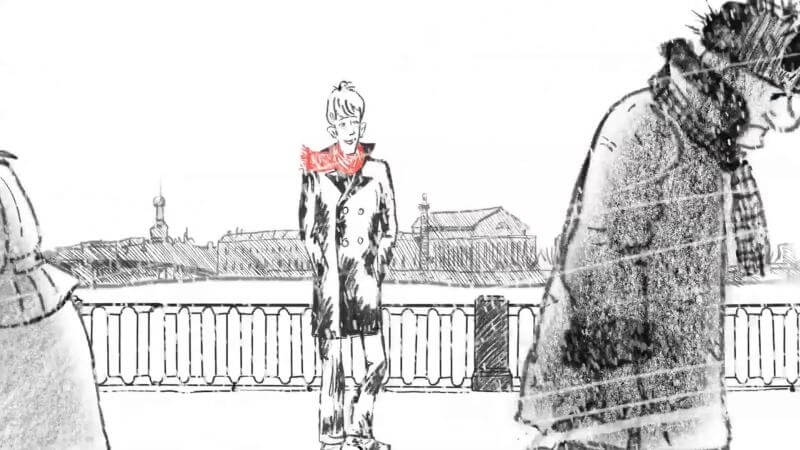
HANGING WITHOUT WALLS will be having International Premiere at Thessaloniki Documentary Film Festival, with the film crew in attendance.
February 2024
Attending EFM Berlinale Market 2024
HANGING WITHOUT WALLS – Market Premiere
THE SHOSHANI RIDDLE – Market Premiere
January 2024
On the occasion of the 100th anniversary of Franz Kafka's death, the VILLA STUCK Museum in München, in cooperation with fest.DOK München, is holding a screening of KAFKA's LAST STORY.
We have acquired two new films:
HANGING WITHOUT WALLS by Jana Durajova, Lena Kusnierikova, Slovakia 2024 And STILL WATERS by Tsivia Barkai Yacov, Israel 2023
December 2023
San Diego International Jewish Film Festival is screening 5th PARAGRAPH – INVALIDS.
November 2023
CONQUERING TIME - AGNES KELETI is having its Israeli Premiere at Jerusalem Jewish Film Week.
October News
Attending MIA Market Rome, MEDIMED Spain, MIPCOM Cannes 2023
September News
Moscow Jewish Film Festival is screening HONEY TRAP, MOVING ON and CONQUERING TIME: AGNES KELETI
August News
We have added new acquisitions to our catalogue :
The Shoshani Riddle by Michael Grynspan, Israel
Only in Theaters by Raphael Sbarge, USA
Jews of the Wild West by Amanda Kinsey, USA
5th Paragraph – Invalids by Boris Maftsir, Israel
We Are Pentothal by Tsipi Karlik, Israel
Gazozz by Tommy Lang, Israel
Lost Lines, Last Traces by Martin Gressman, Germany
Mischmasch by Uta Arning, Sweden
July News
FESTIVAL RESISTANCES in France is screening FADING VALLEY
June News
MOLDOX Film Festival is screening LEAVING TO REMAIN
LEAVING TO REMAIN - The Guardian review
Attending COPRO Tel Aviv
Russian American Film Festival in US is screening 5th PARAGRAPH - INVALIDS
May News
8 Market screenings at MIPTV Cannes
WHAT IF – NY Times Review
April News
IN HIS IMAGE - Broadcast Premiere - HOT8 - Yom Hazikaron 2023
March 2023
Seattle Jewish Film Festival is screening HONEY TRAP
Attending Thessaloniki Documentary Film Festival AGORA, CPH:DOX, FILMART.
February 2023
Berlinale EFM 2023 Market Screenings :
LEAVING TO REMAIN - Market Premiere
CONQUERING TIME - AGNES KELETI - Market Premiere
HONEY TRAP - Market Premiere
MOVING ON - Market screening
January 2023
MOVING ON by Maya Mcmanus Ronen - broadcast in New Zealand.
October 2022
Attending Jihlava International Documentary Film Festival in Czech Republic
LEAVING TO REMAIN - World Premiere at Jihlava IDFF
August 2022
Museum of Jewish Heritage - A Living Memorial to the Holocaust in New York is screening THE FLAT.
July 2022
THE CERTAINTY OF PROBABILITIES to be screened at 31st FILMKUNSTFEST Schwerin, German Premiere.
In the presence of the director Raluca Durbacă.
May 2022
A restored copy of THE KOMEDIANT and WHAT IF to be screened at Toronto Jewish Film Festival.
WHAT IF? selected to the FESTIVAL INTERNACIONAL DE CINE POLITICO in Buenos Aires, Premiere in Argentina.
Le musée d'Art et d'Histoire du judaïsme (MAHJ) à Paris is screening WE WERE THE OTHERS.
April 2022
Copenhagen Jewish Film Festival is screening THE WAY OF MAN - A FILM ABOUT MARTIN BUBER
May 2022
Attending Festival de Cannes / Marché du film 2022.
April 2022
Attending Visions du réel Nyon
March 2022
Attending Thessaloniki Documentary Film Festival, Cinéma du réel, CPH:DOX, FILMART.